
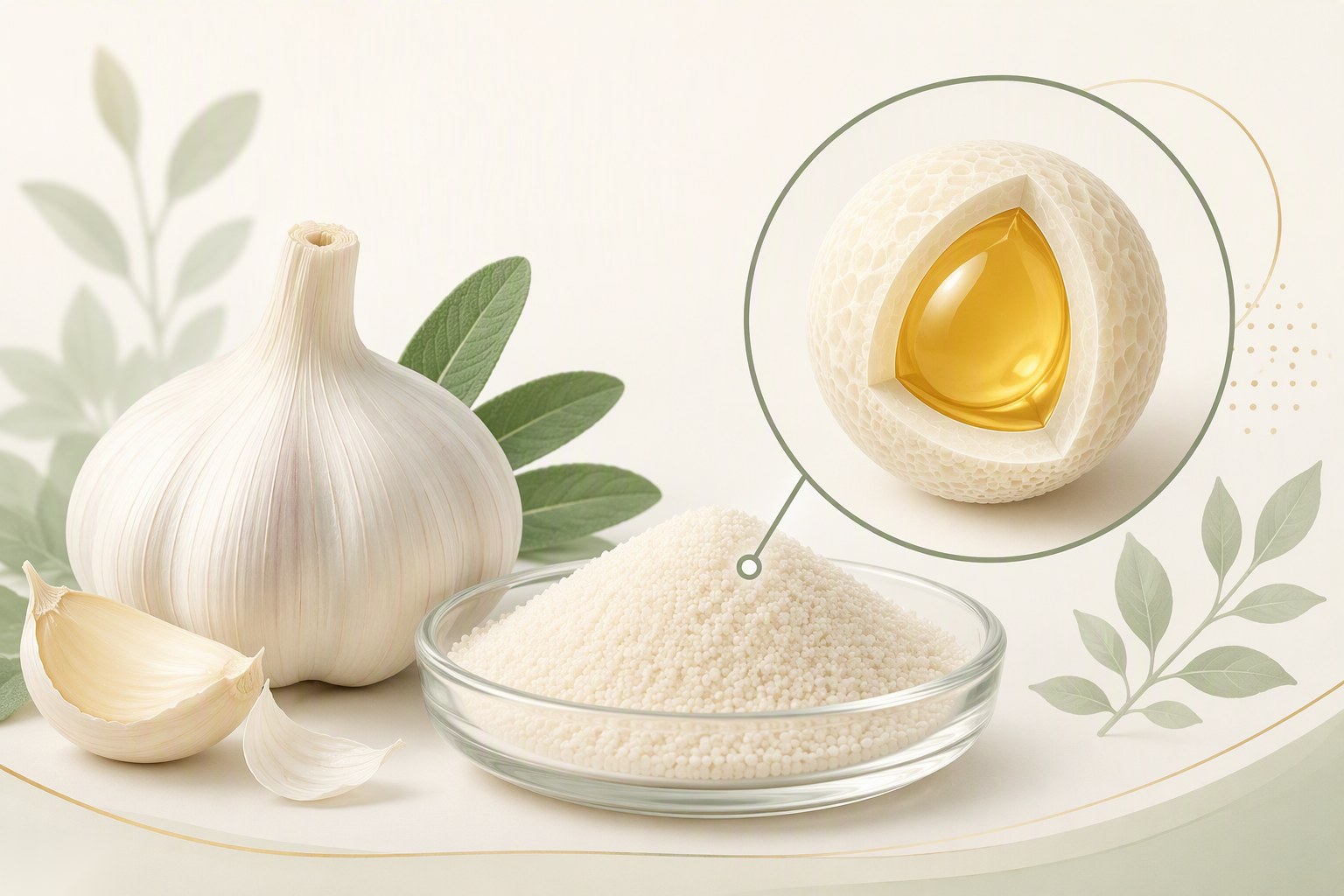
Allicin and the diallyl sulfide family in garlic essential oil carry broad-spectrum antimicrobial activity, and demand keeps growing in food preservation and immune-support supplements. But when procurement and R&D teams try to use the oil directly, they usually hit three walls:
- Odor. The garlic note migrates aggressively through a formula; a consumer's first impression on opening the pack is often "this smells like medicine, not a snack."
- Stability. Sulfur compounds are sensitive to light, heat, and oxygen, and liquid garlic oil loses measurable activity over shelf life.
- Process fit. A liquid addition disturbs dough rheology, doses imprecisely, and drifts in flavor intensity from batch to batch.
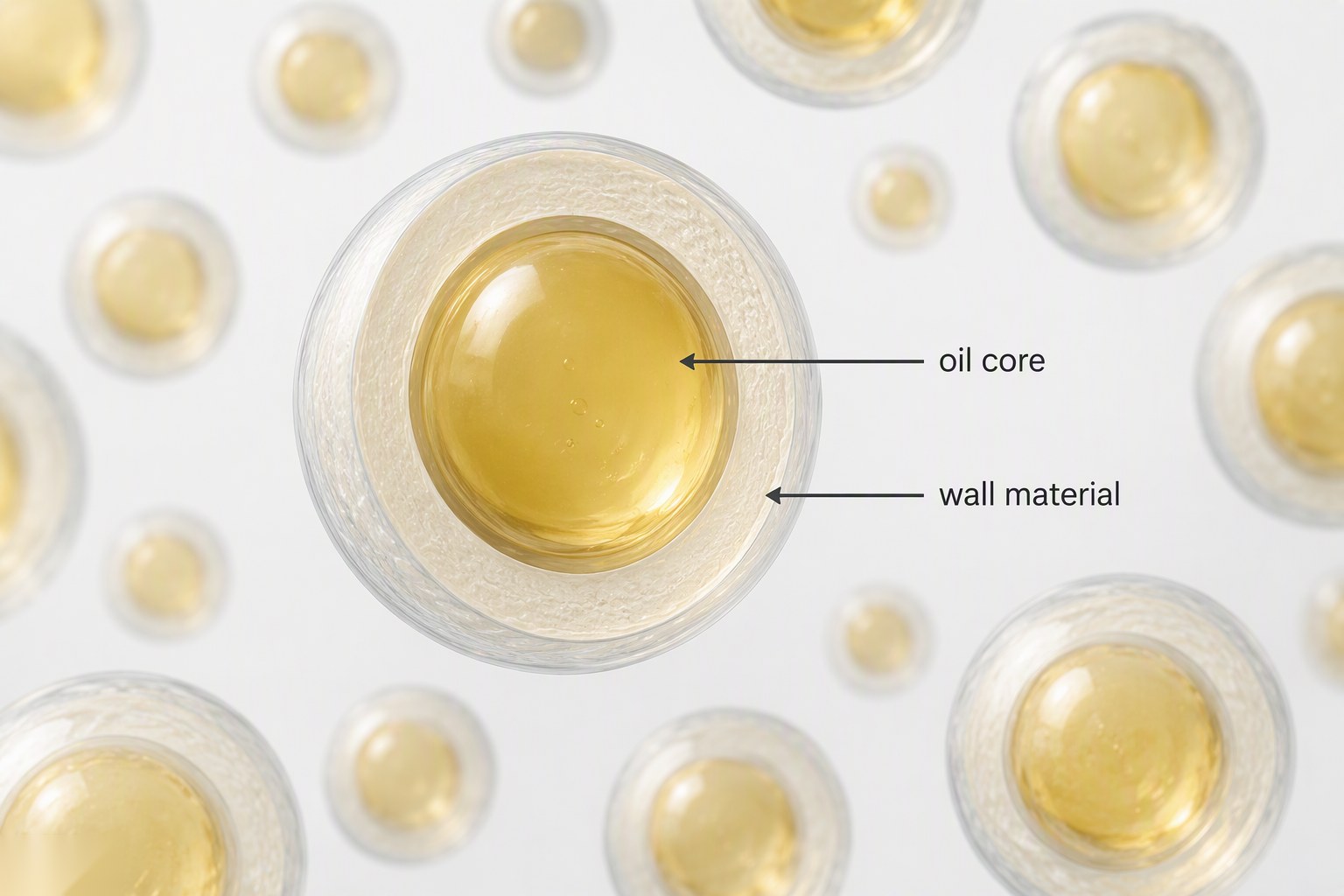
The idea behind microencapsulation is disarmingly simple: dress every droplet of garlic oil in a "wall-material coat," converting a liquid core into a solid powder that can be weighed, blended, and released on schedule. It is also the single most frequent request type in the inquiries our garlic oil microcapsule team receives.
Two Mainstream Process Routes — How to Choose
Route 1: Spray Drying
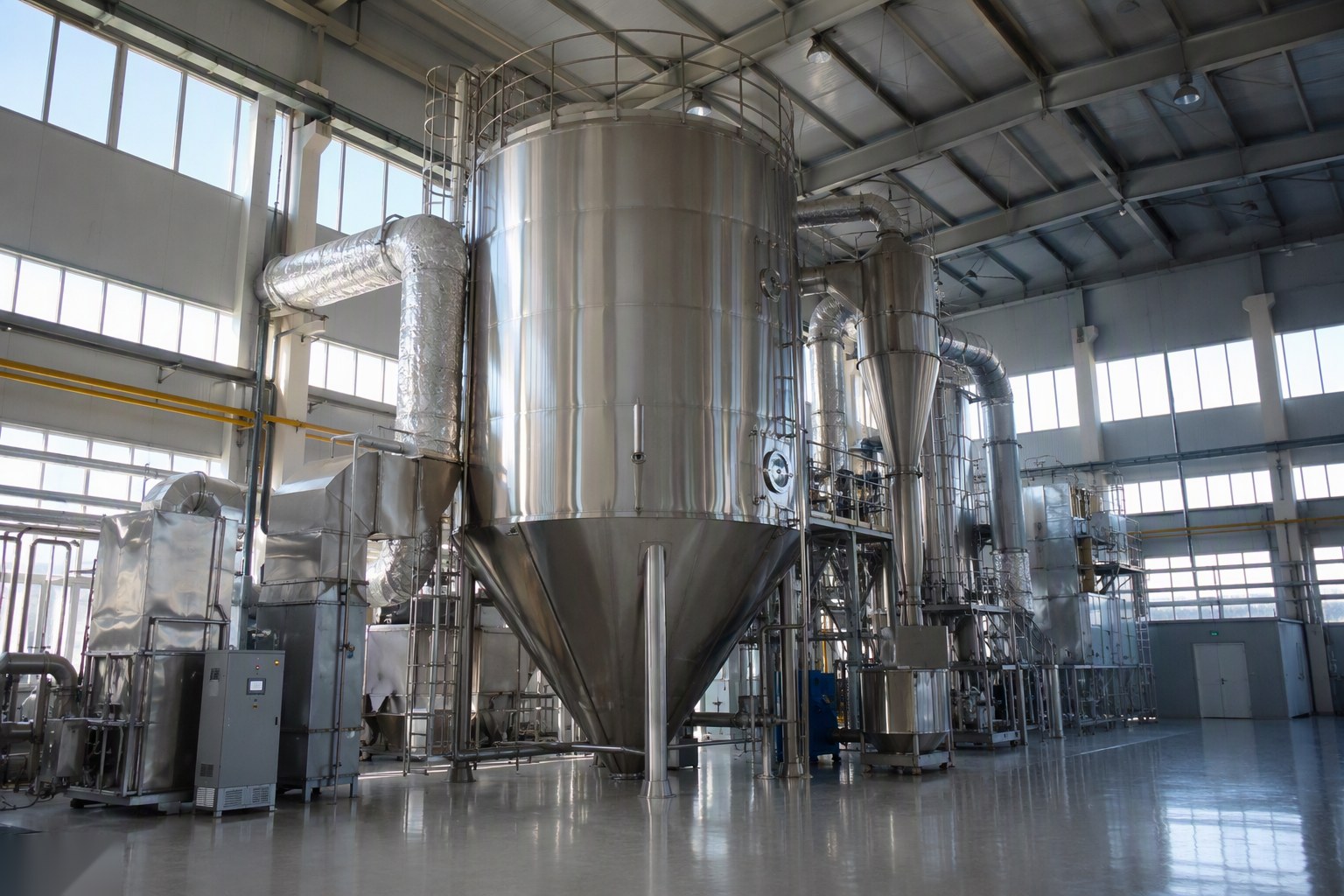
A garlic-oil-in-water emulsion is atomized into a hot air stream; water flashes off instantly and the wall material solidifies into spherical powder. This is the lowest-cost, highest-capacity industrial route.
- Common wall materials: gelatin, whey protein concentrate, modified starch, beta-cyclodextrin blends; a whey protein + inulin system has become a European favorite for its clean-label profile.
- Encapsulation efficiency: with a mature process, 70–85% is the mainstream range.
- Best for: high-volume, cost-sensitive food applications — snack seasonings, instant drink powders.
- Limits: inlet-air temperature costs a small fraction of heat-sensitive actives; powder can cake in very humid storage.
Route 2: Beta-Cyclodextrin Inclusion
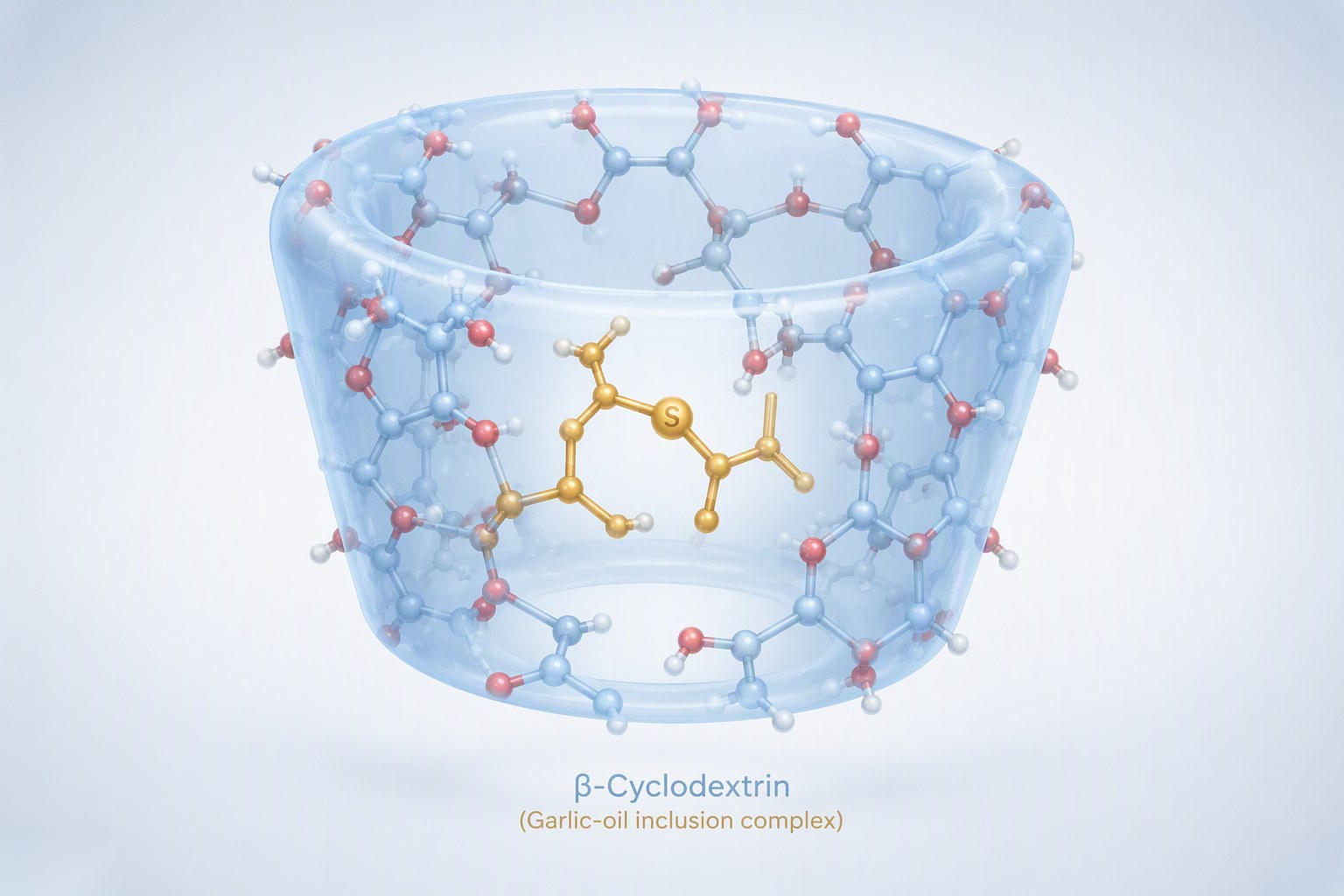
Cyclodextrin molecules have a hollow, bucket-shaped cavity. Garlic oil molecules nestle inside that cavity to form an inclusion complex — encapsulation efficiency above 90%, and the best odor masking of the two routes.
- Best for: odor-critical premium applications — chewing gum, lozenges, pet treats.
- Limits: cyclodextrin raw material costs roughly 3–5× modified starch, so unit economics are visibly heavier.
Selection rule of thumb: if your finished product retails above roughly US$10/kg and odor is the primary battle, favor cyclodextrin; for volume snack foods, spray drying's cost structure is healthier. Most customers sample both routes during development.
Case Study: A European Plant-Based Snack Brand
The following case is compiled from a typical development project we supported; customer details are anonymized.
Background and Pain Points
The customer is a European plant-based snack startup of about 40 people. Its flagship product is a high-protein chickpea crisp sold through organic supermarkets. In early 2024 the team planned an "immune support" functional snack line and needed garlic oil for natural antimicrobial positioning and differentiation.
Problems concentrated at pilot stage: liquid garlic oil sprayed directly onto the crisps made the whole pack pungent, splitting the tasting panel; after baking (170°C, 8 minutes), testing showed more than half the active sulfur compounds lost; and oil in direct contact with iron in the seasoning blend developed a faint oxidized, rancid edge.
Sample Screening
The customer sent three in-house formula concepts for evaluation. We prepared two batches per process route:
| Sample | Route | Encapsulation | Odor Assessment |
|---|---|---|---|
| A | Spray drying (gelatin / modified starch) | ≈78% | Mild garlic note on opening; acceptable |
| B | Spray drying (WPC + inulin) | ≈74% | Faintest odor; clean-label friendly |
| C | Cyclodextrin inclusion | ≈91% | Almost no garlic note; highest cost |
After the customer ran bake simulations on its own line, Sample B retained active compounds closest to target — and the "organic inulin + whey protein" wall system matched its clean-label positioning exactly. B went to pilot.
Two Hiccups at Pilot Scale
Hiccup one: batch color drift. The first 200-kg pilot batch came out darker than lab samples. The cause: the customer had raised inlet-air temperature chasing throughput, and the inulin underwent slight Maillard browning. Both sides agreed to dial the temperature back and accept roughly 8% lower capacity — a trade the customer consciously accepted.
Hiccup two: addition method. The original plan blended microcapsule powder straight into the seasoning in a high-speed mixer, which ruptured about 5% of capsules. Switching to a low-speed tumble blend late in the seasoning step, plus a higher-barrier inner bag, essentially solved it.
Where It Stands
The product launched in European organic channels at the end of 2024. Reorder behavior on the first order beat the brand's own expectations, and the 2025 annual frame volume is about six times the trial order. The customer is now evaluating the same microencapsulation platform for an onion-oil line — a classic platform effect: once the wall-material system is validated, the marginal cost of swapping cores drops sharply.
Practical Advice for Product Developers
- Test odor before activity. The first metric most customers actually care about is "what it smells like when the pack opens" — run sensory evaluation ahead of the lab numbers.
- Stress-test under real line conditions. Lab-oven data is indicative at best; validate under your own baking, sterilization, and mixing profiles.
- Watch wall-material labeling. E-numbers matter for EU export, GRAS status for the US — wall choice directly shapes your ingredient declaration.
- Don't skip the small trial order. A 1–5 kg sampling fee is negligible next to the cost of a failed production run.
Frequently Asked Questions
What encapsulation efficiency can garlic oil microcapsules reach?
With spray drying and quality wall materials, the industry mainstream is 70–85%. The exact figure depends on core-to-wall ratio, inlet temperature, and wall formulation. For odor-sensitive applications, evaluate residual odor alongside efficiency rather than chasing the highest number.
Which food applications suit microencapsulated garlic oil?
Common uses: plant-based snack seasoning, functional gummies, meat preservation systems, instant drink powders, and pet-food palatants. It is not suitable for clear liquid beverages, since a microcapsule is a dispersed system.
What is the minimum order for microencapsulated garlic oil?
Standard formulas typically start at 25 kg; custom work (specific wall materials, targeted release profiles) depends on complexity. Many suppliers offer 1–5 kg sample batches for early-stage testing.
Will garlic oil microcapsules survive baking temperatures?
Quality wall materials tolerate typical short baking at 160–180°C, but allicin-family actives still degrade partly at high heat. Run an accelerated test under your target process conditions before fixing the dosage.