
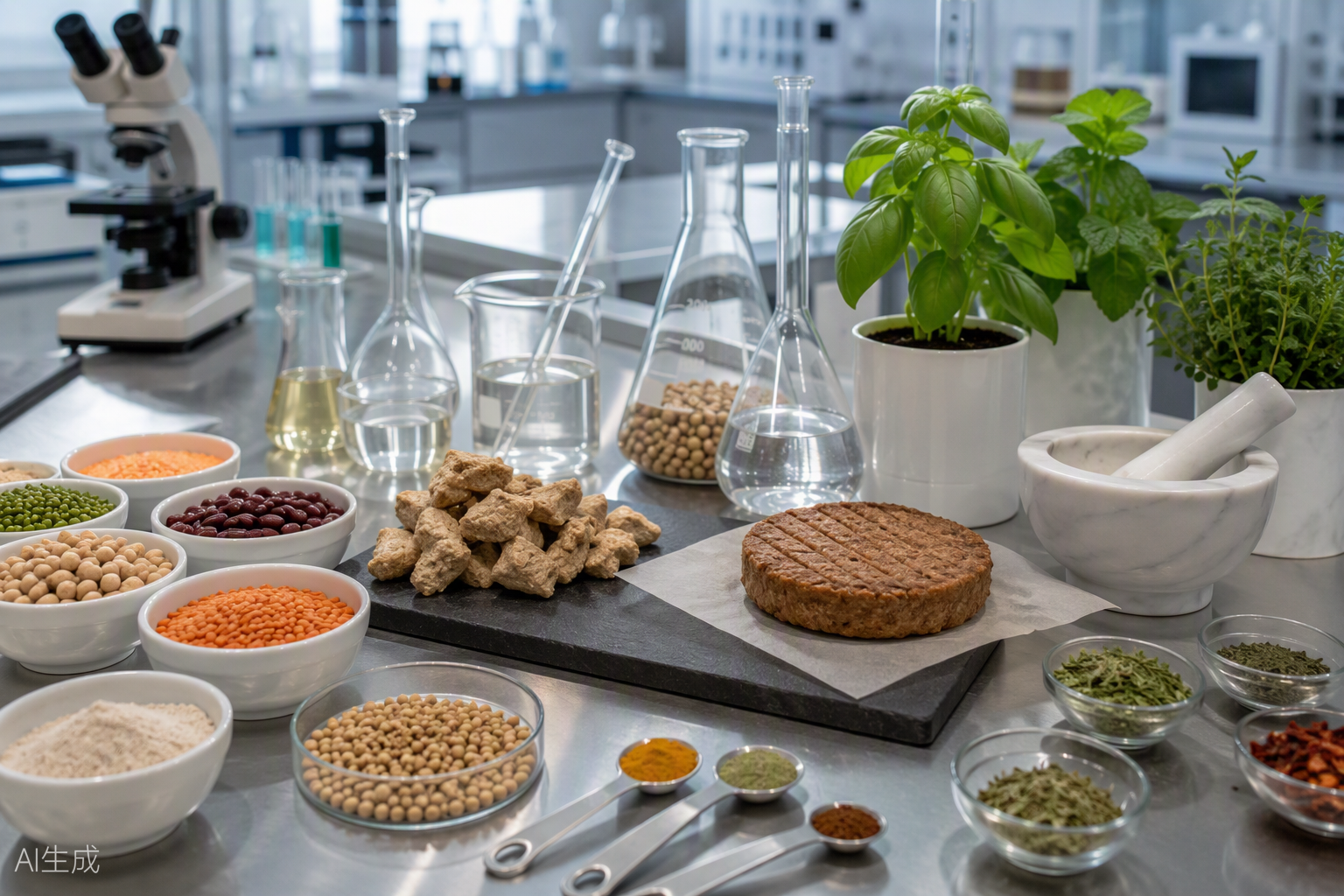
The Umami Gap Is Real
Plant-based meat has conquered texture. Modern extrusion gives pea and soy protein a fibrous, meat-like bite that impressed even skeptics. Yet repeat-purchase data keeps pointing at the same weakness: flavor. Consumers describe many products as "flat," "beany," or "one-note" — and flavor fatigue is now the category's biggest retention problem.
Animal fat and muscle tissue deliver a layered savory experience: roasted notes from the Maillard reaction, sulfur compounds from cooked alliums and meat proteins, and the mouth-coating richness of rendered fat. Pea protein isolate brings none of this — and adds its own green, beany off-notes that must be managed before you can build anything on top.
Why Spice Oils, Not Flavor Chemicals
Clean-label positioning is the plant-based category's license to operate. The same shopper who pays a premium for a pea-protein burger reads the ingredient list looking for words they recognize. "Natural flavor" is acceptable; a long list of isolates is not.
Steam-distilled spice essential oils — garlic, onion, black pepper, white pepper, cumin — sit in a sweet spot: they are recognizably food, intensely concentrated, and remarkably stable in high-fat, high-heat applications like extrusion and pan-frying. Because they are distilled rather than extracted with solvents, they also carry a clean processing story.
Building the Flavor Architecture
Base layer — masking. Garlic and onion oils at 50–150 ppm suppress beany, green notes from pulse proteins. This is not about making the product taste like garlic; at sub-threshold levels, these oils round off the sharp edges of the protein base.
Mid layer — savory depth. Black pepper and cumin oils add warmth and a perception of "cooked meat" complexity. White pepper oil, less familiar to Western palates, contributes an earthy, almost funky note that reads as animal richness in the finished product.
Top layer — grill and smoke. A touch of cassia or star anise oil — used sparingly, well below recognition threshold — amplifies roasted Maillard notes. Some developers add a fraction of smoked paprika or a natural smoke flavor at this stage.
Practical Considerations
Dosing precision. Essential oils are 50–100× more concentrated than oleoresins or fresh aromatics. Work in ppm, pilot every change, and remember that fat content amplifies perception — a 20% fat analogue needs meaningfully less than a 5% one.
Heat stability. Distilled spice oils survive extrusion better than fresh ingredients, but volatile top notes still flash off. Dose for the finished, cooked product — not the raw dough.
Uniformity. In a high-viscosity matrix, even distribution is the challenge. Pre-blending oils into the fat phase, or using a carrier oil, prevents hot spots that read as inconsistency between production runs.
The Sourcing Angle
For flavor houses and brand R&D teams, the practical bottleneck is rarely the blend design — it is securing spice oils with consistent sulfur profiles and heat-stable aromatic fractions, lot after lot. A garlic oil that varies 30% in diallyl sulfide content between batches will produce a burger that varies between batches. Standardization, GC-MS verification, and supplier discipline are what make a signature flavor reproducible at scale.