
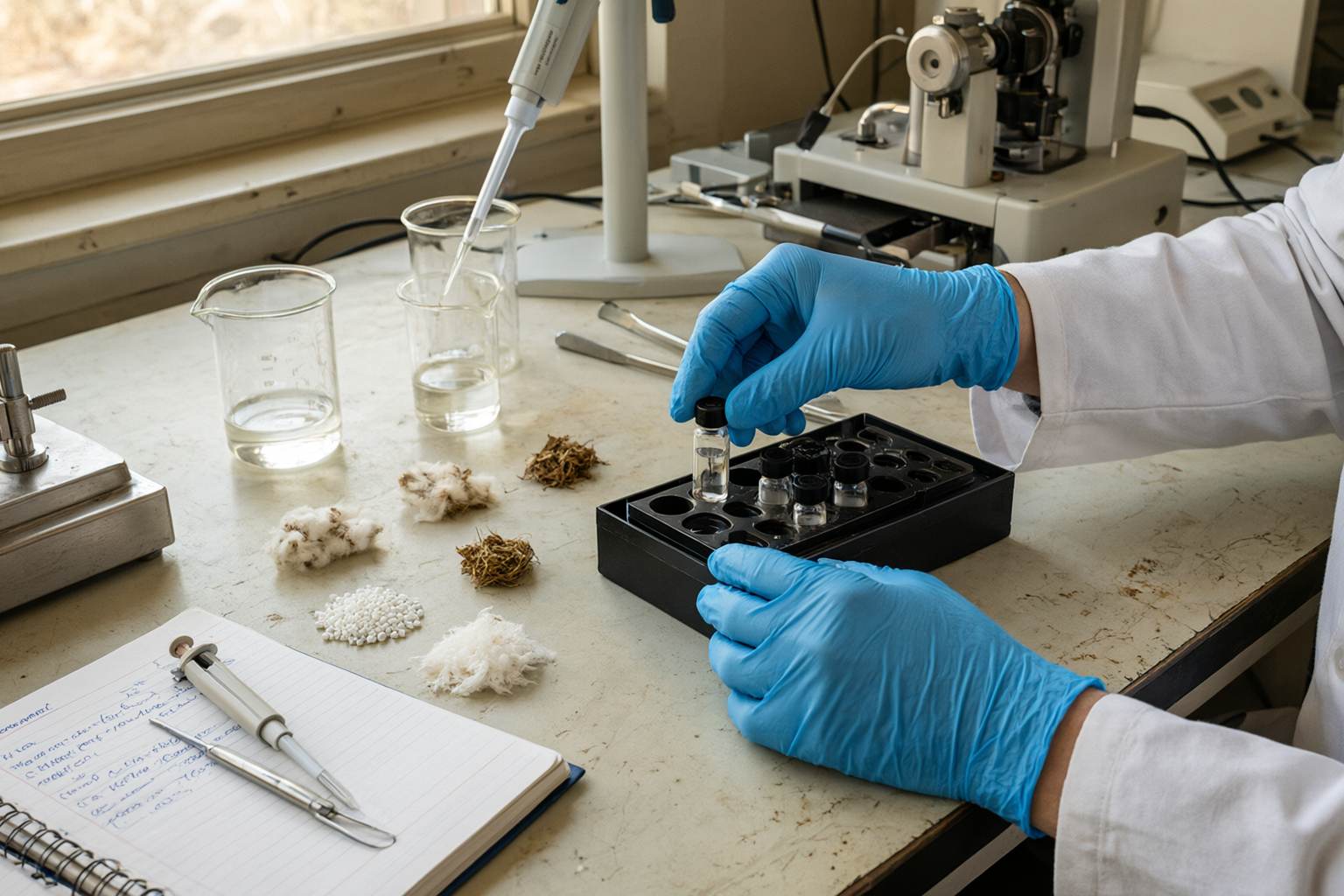
Category: Quality & Compliance Suggested date: Oct 28, 2026 Suggested slug: /en/in-the-field/ginger-vs-garlic-c14-testing.html Meta title: Ginger Oil vs. Garlic Oil: Why Only One Needs a Carbon-14 Test (58 chars) Meta description: Why must garlic essential oil pass carbon-14 testing while ginger oil doesn't? The answer lies in chemistry, economics, and what C14 can actually see.
Open two Certificates of Analysis side by side — one for ginger essential oil, one for garlic essential oil — and you will usually spot an asymmetry. The garlic oil COA carries a carbon-14 report, sometimes from an accelerator mass spectrometry (AMS) laboratory, reporting a pMC value against ASTM D6866. The ginger oil COA does not. Both oils are steam-distilled from plants. Both are labeled 100% natural. So why does one cargo need isotope physics and the other get away without it?
The short answer: carbon-14 testing detects fossil carbon, and only one of these two oils is worth faking with fossil carbon. The longer answer is about molecular structure, adulteration economics, and — most importantly — what a C14 result can and cannot see. That is what this article covers.
In our companion article Carbon-14 Testing: From Cosmic Rays to Proving Natural Origin, we walked the full chain from cosmic rays to COA: how ¹⁴C is manufactured in the upper atmosphere, how living plants keep their tissue carbon at atmospheric equilibrium, how the 5,730-year half-life erases it from petroleum, and how laboratories count the remaining atoms. The two-minute version below is enough for what follows.
Sixty Seconds of Isotope Physics
Cosmic rays convert atmospheric nitrogen into carbon-14, which oxidizes to ¹⁴CO₂ and mixes into the air. Photosynthesis absorbs it indiscriminately, so every living plant — ginger, garlic, anything — carries roughly the same ¹⁴C concentration, expressed as percent modern carbon (pMC): about 100 for fresh biomass.
Death stops the exchange, and the clock starts. Half the ¹⁴C is gone in 5,730 years; effectively all of it is gone after about 50,000 years. Petroleum formed millions of years ago, so petrochemical feedstocks — the raw material of synthetic aroma chemicals — contain essentially zero pMC. A laboratory does not need to identify what molecules are in the oil. It only needs to count the isotope.
That single asymmetry — living carbon near 100 pMC, fossil carbon near 0 — is the entire basis of natural-origin testing. Nothing in synthetic chemistry can put cosmic-ray carbon back into a fossil feedstock.
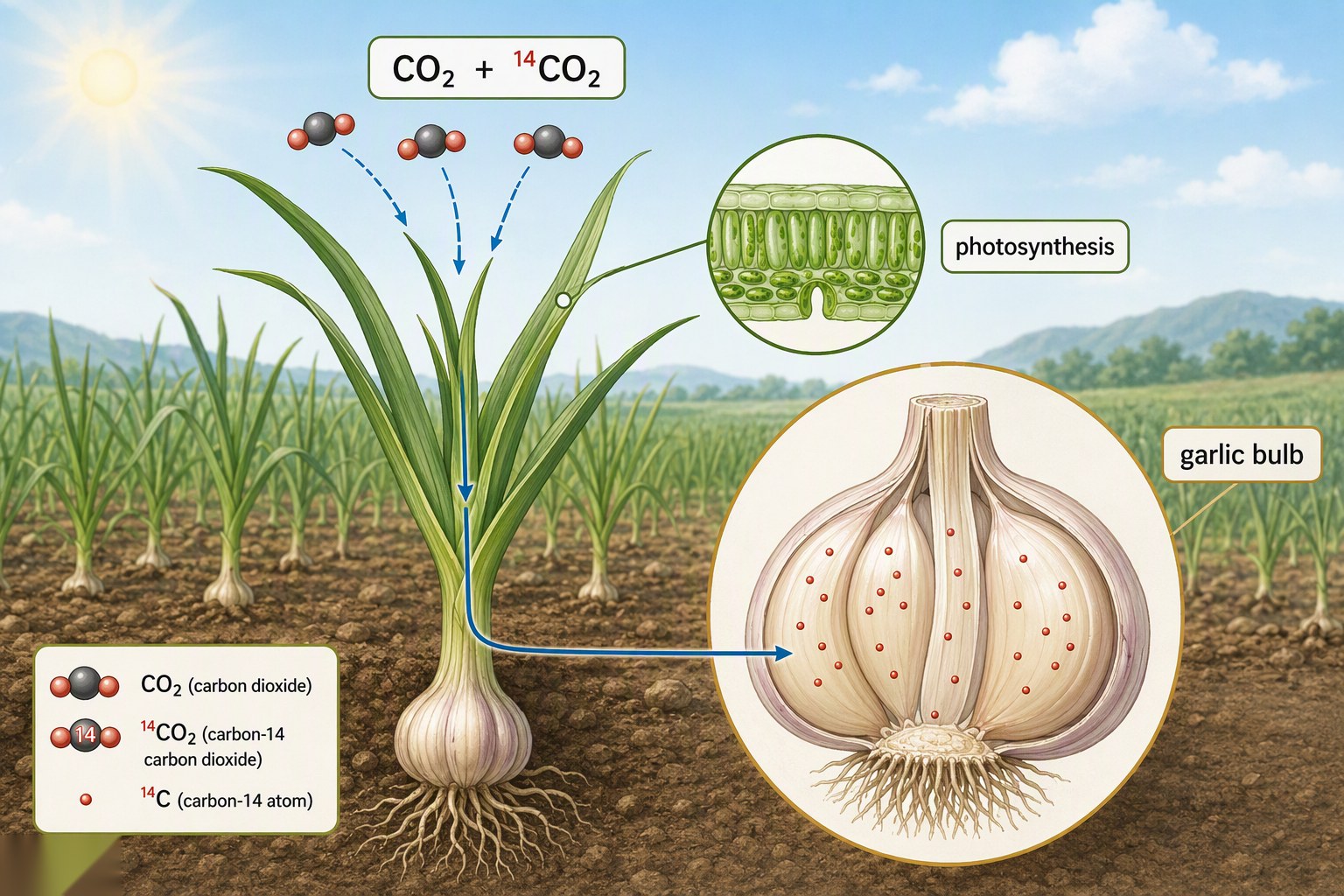
One number, three stories: a fresh ginger or garlic bulb reads near 100 pMC; a 50/50 blend reads near 50; petrochemical synthesis reads near zero.
What C14 Actually Sees — and What It Misses
Here is the detail that explains the entire ginger/garlic split. Carbon-14 answers exactly one question: where did the carbon come from? It does not identify molecules. It does not measure purity or potency. And it has one famous blind spot: it cannot see dilution with other modern plant material.
Blend expensive natural oil with cheap vegetable oil, or with distilled citrus terpenes, and the pMC barely moves — modern carbon diluting modern carbon stays near 100. C14 passes the fraud. Whether that blind spot matters depends entirely on how each oil is actually faked, and the two oils could not be more different in that respect.
Ginger Oil: The Fraud That C14 Cannot Catch

Ginger oil's identity compound, zingiberene, is a large multi-chiral sesquiterpene — uneconomical to synthesize, which shapes the entire fraud profile of this oil.
Start with economics. Ginger is a bulk agricultural crop, grown on a massive scale in China and India. The oil is a relatively low-priced commodity, and its identity-giving compound — zingiberene, a C15 sesquiterpene typically making up 20–40% of the oil — is a large, multi-chiral molecule with no economical commercial synthesis route. Faking ginger oil with fully synthetic copies of its own chemistry would cost more than simply distilling ginger.
So nobody does that. Real-world ginger oil adulteration is mundane: stretching the oil with cheap natural terpenes — d-limonene from citrus, 1,8-cineole from eucalyptus, sometimes other low-cost spice fractions. The adulterant is plant-derived, so it carries modern carbon, so a C14 test returns a comfortable ~100 pMC and reports the oil as "natural." Which, in the only sense C14 can measure, it is.
One honest note: none of this means ginger oil adulteration is rare or harmless. It means the correct weapon is different. For ginger oil, the decisive tool is the GC-MS fingerprint — the full chromatographic pattern with a verified zingiberene assay, backed by physicochemical data (specific gravity, refractive index, optical rotation). A skilled analyst can spot stretched terpene profiles in the chromatogram itself. That is the documentation standard we apply to our own ginger oil, and it is what buyers should demand on every batch; our guide to reading a COA shows exactly which lines carry the evidence.
Garlic Oil: The Fraud That Only C14 Can Catch
Garlic oil's marker compounds — diallyl di- and trisulfide — are small molecules synthesized in two cheap steps from petrochemical feedstocks, and they are what makes this oil the industry's most counterfeited.
Garlic oil sits at the opposite end of every axis. Its value compounds — diallyl disulfide and diallyl trisulfide — are small, simple molecules, synthesized in one or two cheap steps from allyl chloride and sodium sulfide. Both are commodity petrochemicals. Synthetic diallyl disulfide is abundant, inexpensive, and structurally identical to the molecule inside a garlic bulb.
That identity is the trap. A molecule of synthetic DADS and a molecule of plant-made DADS have the same mass, the same retention time, and the same mass spectrum. GC-MS — the workhorse of essential oil analysis — cannot tell them apart. In a widely cited blind study by a carbon-14 laboratory, five retail "garlic oils" all passed GC-MS as natural; C14 testing then showed two contained no plant carbon at all (0% biobased), one was only 67% natural, and only one was fully plant-derived. Leading authentication laboratories report roughly the same pattern at industry scale: close to one in three samples labeled "natural" shows partial or complete petrochemical origin.
Meanwhile the motive is enormous. Garlic oil prices are structurally high — it takes a large mass of fresh bulbs to produce a small mass of oil, and demand from feed, food, and supplement makers keeps tightening supply. Whenever natural oil gets expensive, the temptation to blend in fossil sulfides becomes irresistible. This is the dynamic our companion article on garlic oil replacing synthetic additives documents from the formulation side.
The molecules are identical; only the isotopes differ. Natural garlic oil reads near 100 pMC. Fossil-fed synthetic reads near zero. No blender, however skilled, can reconcile those two numbers — which is why C14 is the one test a cheater cannot synthesize away.
The Testing Matrix: Match the Test to the Fraud
| Factor | Ginger essential oil | Garlic essential oil |
|---|---|---|
| Marker compounds | Zingiberene, β-bisabolene (complex sesquiterpenes) | Diallyl di-/tri-sulfide (simple allyl sulfides) |
| Economical synthesis? | No — too complex to fake at scale | Yes — two steps from petrochemicals |
| Typical real-world fraud | Dilution with cheap natural terpenes | Blending with synthetic sulfides |
| What C14 sees | Nothing useful (diluents are modern carbon) | Everything (fossil carbon reads ~0 pMC) |
| What GC-MS sees | The fraud (stretched fingerprint, low zingiberene) | Nothing (synthetic and natural are identical) |
| Primary QC tool | GC-MS fingerprint + physicochemicals | C14 (AMS, ASTM D6866) + GC-MS |
| C14 requirement | Optional | Non-negotiable |
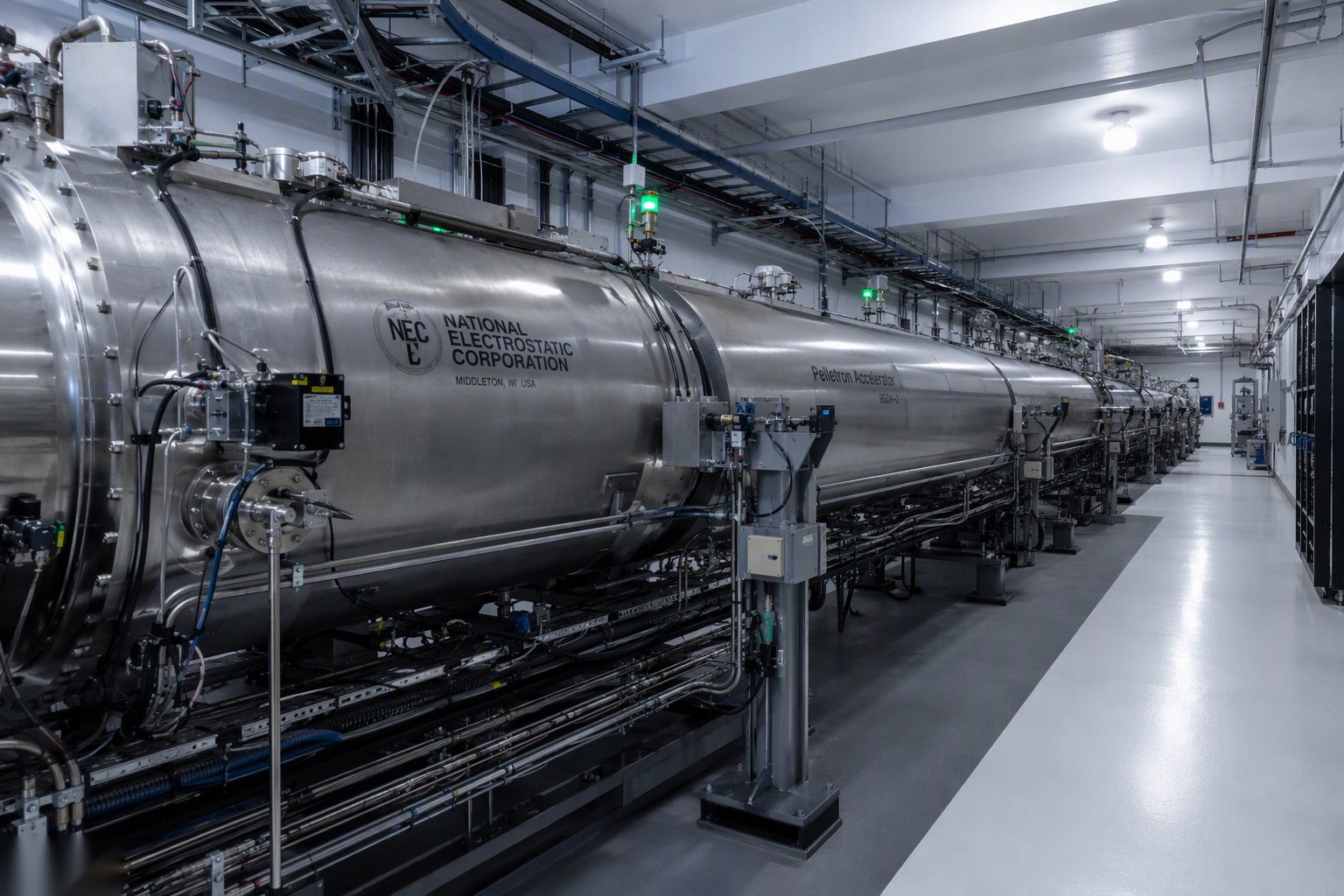
Same shelf, different fraud: the adulterant chemistry of each oil dictates which instrument catches it.
The Cost Question: What Reasonable Verification Actually Runs
Buyers sometimes read the garlic/ginger asymmetry as a cost decision — "skip the C14, save the fee." Run the numbers and the logic inverts. A single AMS carbon-14 certificate costs on the order of a few hundred dollars and needs only milligrams of sample; classical liquid scintillation counting is cheaper per test but demands grams of material and weeks of counting time. Against a drum of genuine garlic oil — priced at a multiple of a synthetic blend, which is precisely why it gets counterfeited — one certificate per batch or per supply campaign is a rounding error. It is also cheap recall insurance: the expense profile of discovering fossil sulfides in your oil at the production line is entirely different from discovering them in a finished product audit.
For ginger oil, the economics cut the other way. Spending on C14 buys a clean bill of health for the one fraud it cannot see, while the fraud that actually occurs — terpene stretching — is sitting in a GC-MS run your supplier should already be providing. Redirect that budget into insisting on batch-specific chromatograms with zingiberene assays, and into periodic rotation of your reference fingerprint database.
The generalizable rule: testing spend should track fraud exposure, not ingredient prestige. Premium oils are premium precisely because they are worth counterfeiting.
What to Demand on Each COA

A GC-MS system: the workhorse of essential oil quality control — and completely blind to the synthetic sulfides that only carbon-14 exposes.
Translate the matrix into paperwork. For ginger oil: a batch-specific GC-MS chromatogram with zingiberene in the 20–40% range, specific gravity and refractive index within pharmacopoeial windows, optical rotation, and heavy-metal/microbial results. For garlic oil: all of that, plus a current C14 certificate from a third-party AMS laboratory reporting pMC consistent with ~100, referencing ASTM D6866 or ISO 16620-2, tied to your batch or lot number rather than a generic archive document.
Ask for both documents by name — a GC-MS chromatogram and a C14 certificate — and apply the reading framework from our COA guide. Suppliers of genuinely natural material provide both without hesitation; suppliers of blends tend to produce excuses on exactly the document that would expose them.
The Bottom Line
The asymmetry on the COA is not an inconsistency — it is the market correctly matching tests to threats. Garlic oil must carry a carbon-14 certificate because its chemistry can be faked cheaply from petroleum and no other common test can see the fake. Ginger oil doesn't need one because its chemistry can't be economically synthesized, and the fraud it actually suffers — natural-terpene dilution — is invisible to isotopes and visible to a chromatogram.
A quality budget is always finite. Spend it where the fraud actually lives.
Frequently Asked Questions
Can a genuinely natural oil fail a carbon-14 test?
No. If every carbon atom is plant-fixed, the sample reads near 100 pMC by definition. A result near zero means fossil carbon is present, which means the oil is synthetic or blended — regardless of what the label says. Note the reverse caveat, though: passing C14 proves carbon origin, not purity, so it cannot by itself rule out dilution with other modern plant material.
My ginger oil supplier offers a C14 report. Is it useless?
Not useless — natural origin is still worth confirming — but insufficient on its own. A limonene-stretched ginger oil passes C14 happily. Pair the C14 report with a full GC-MS chromatogram and a zingiberene assay, and the combination starts to mean something.
Does "food grade" or "pharmaceutical grade" replace either test?
No. Grades govern contaminants — heavy metals, microbes, residues — not origin. A synthetic sulfide blend can be impeccably "food grade" and still not contain a single molecule of garlic.
How often should C14 be re-run for garlic oil?
Per batch, or per supply campaign at minimum. AMS needs only milligrams of sample and most laboratories report within about two weeks; against the value of a drum of genuine garlic oil, the cost is minor. Archive certificates older than your current supply relationship deserve fresh sampling.
If I run both GC-MS and C14 on garlic oil, am I fully covered?
For plant-versus-petroleum authenticity, yes. For deeper questions — which country's garlic, which harvest — add stable-isotope ratios (δ¹³C, δ²H). Serious authentication programs use all three, and C14 remains the one a cheater cannot synthesize away.
Wans Chemicals supplies garlic oil and ginger oil with batch-specific GC-MS documentation, and provides C14 (AMS) certificates for garlic oil on request. Contact our team for COA samples, specification sheets, or a quotation.