
Category: Food & Beverage Suggested date: Oct 30, 2026 Suggested slug: /en/in-the-field/ginger-oil-clean-label-preservation.html Meta title: Ginger Oil + Vitamin C + Potassium Sorbate: A Natural Preservation Trio (60 chars) Meta description: Ginger oil is a legal natural flavouring with real antimicrobial and antioxidant activity. How it completes a vitamin C + potassium sorbate system — and where the regulatory lines are.
Read the ingredient list of a European chilled ready-meal or a clean-label salad dressing, and you will often find a quiet phrase near the bottom: "natural flavouring." In most cases it is doing exactly what it says — providing flavour. But in a growing number of formulations, that phrase is doing two jobs at once. Ginger essential oil is the clearest example: its legal identity is a flavouring, but its working résumé includes antimicrobial and antioxidant activity that food formulators are learning to put to use.
This article is about that second job. Specifically: how ginger oil completes a preservation system built on vitamin C and potassium sorbate — the two most widely used additive antioxidants and preservatives in the food industry — without asking your customers to add a new ingredient category or your regulatory team to cross any lines.
A Flavouring With a Day Job
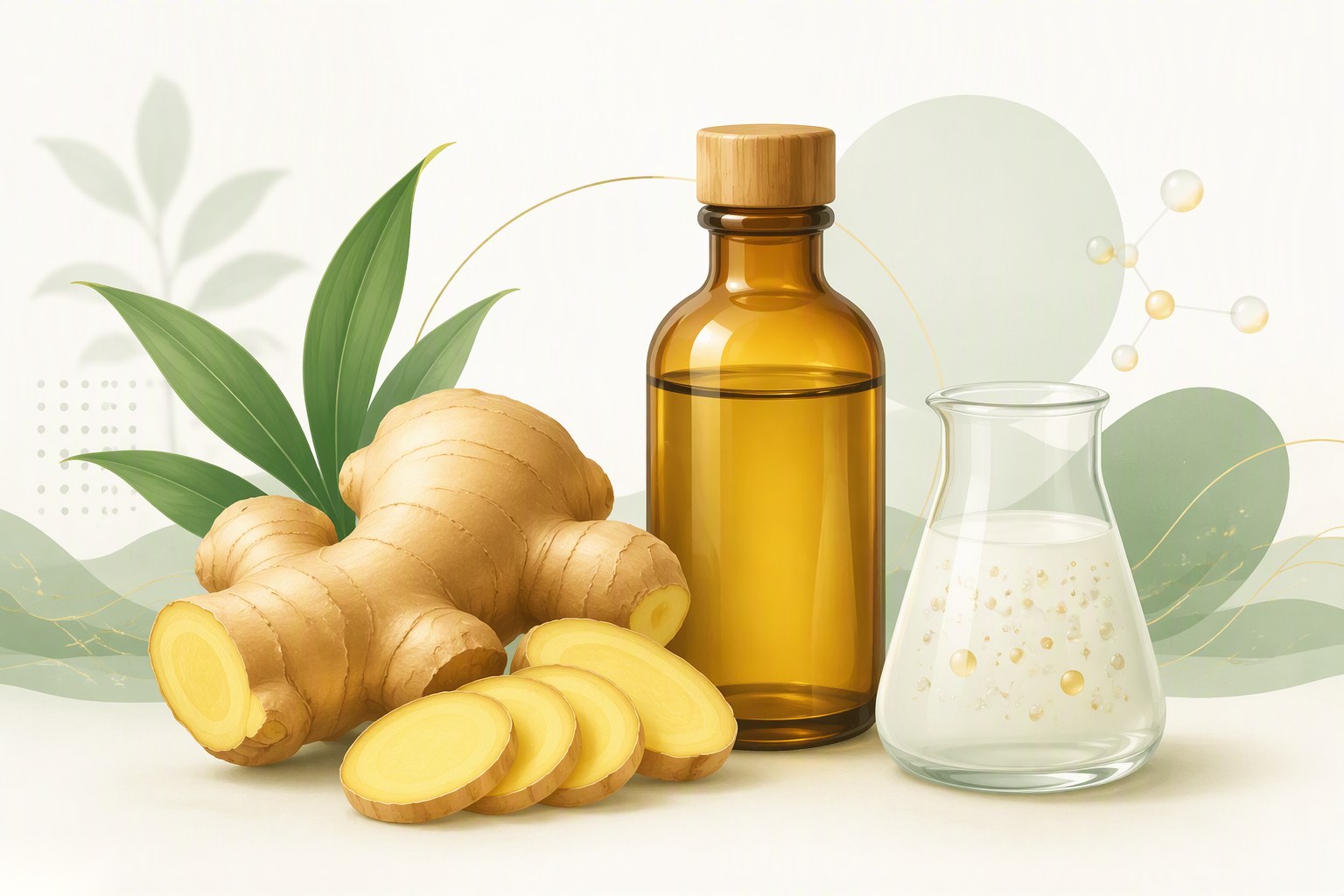
Ginger essential oil: legally a natural flavouring, chemically a lipophilic terpene blend with documented antimicrobial and antioxidant activity.
Ginger oil's regulatory identity is precise, and worth stating plainly. In the European Union it is a food flavouring under Regulation (EC) No 1334/2008. In the United States, ginger and its derivatives are generally recognized as safe (GRAS), with ginger oil listed under 21 CFR 182.20 as a natural flavouring substance. On an EU label it appears as "natural flavouring"; in the US, typically as "natural flavor" or ginger extract.
That identity is a feature, not a constraint. It means ginger oil enters a food manufacturer's existing supply chain and labelling practice without any novel-food review or new additive approval — a plant-derived ingredient with centuries of culinary history and a modern regulatory file. What it cannot do is equally precise: no essential oil is approved in the EU or US as a preservative. Regulation (EC) No 1333/2008, the EU's positive list of preservatives, contains no plant essential oil, and neither does the US framework. Any supplier who tells you ginger oil can be declared as a preservative is setting your regulatory team up for a rejection.
The honest — and commercially powerful — framing is this: a natural flavouring whose documented antimicrobial and antioxidant activity supports shelf life. That is the same structural play the industry already runs with rosemary extract, fermented cultures, and — as our companion article details for a sibling oil — garlic oil as a plant-derived antimicrobial. The flavouring identity gets it onto the label; the activity does the work.
What the Research Shows
Sliced fresh ginger — the source of the terpene mixture whose antimicrobial and antioxidant activity food scientists are now quantifying in real food matrices.
Antimicrobial breadth. Peer-reviewed work on ginger and its oil reports inhibition of the organisms food safety managers actually worry about: Staphylococcus aureus, Escherichia coli, Salmonella spp., and Listeria monocytogenes, alongside antifungal effects against common spoilage molds. The mechanism is physical. Ginger's terpenes are lipophilic — they partition into microbial cell membranes, increase permeability and fluidity, and collapse the gradients the cell depends on for energy and integrity. Leakage, depolarization, and death follow.
That physical mechanism has a strategic consequence: because the oil is a multi-component mixture hitting several targets at once, resistance develops far more slowly than against a single-site antibiotic. For shelf-life management — a war of attrition against spoilage flora, not a clinical infection — that is exactly the profile you want.
Antioxidant strength where it matters. Lipid oxidation — rancidity, off-flavors, color loss in fat-bearing foods — is the dominant spoilage chemistry in meat products, baked goods, nuts, and emulsified sauces. Ginger's CO₂ extract has been shown to match the synthetic benchmark BHT in suppressing early-stage fat oxidation across a 37–80 °C range, and microencapsulated ginger oil in chilled pork cleared 52% of DPPH radicals at 10 mg/mL while measurably suppressing both lipid oxidation markers and total viable counts across refrigerated storage.
Real food, not just petri dishes. In minced meat at 4 °C, ginger-oil-treated batches held significantly lower total counts and S. aureus levels than controls. In a sauce-beef application, a ginger–basil oil blend (fractional inhibitory concentration index 0.75 — formally "synergistic") extended shelf life by six days. Ginger-oil-loaded edible films added two to three days to fresh-cut broccoli. These are modest, credible numbers — not miracles — and they are the right kind to build a hurdle system on.
The Trio: Vitamin C + Potassium Sorbate + Ginger Oil
The logic of the trio is phase chemistry. Food is rarely one phase — it is water, fat, and interfaces, and each phase has its own failure mode. Each member of the trio guards the phase that matches its solubility, and each covers the organism or chemistry the others miss:
- Vitamin C (E300) is water-soluble. It works the aqueous phase — preventing browning, protecting color, scavenging radicals in the water fraction. But it cannot partition into fat, and lipid oxidation proceeds unchecked without help.
- Ginger oil is lipophilic. Its terpenes concentrate in the fat fraction — precisely where rancidity starts — and its antimicrobial spectrum leans toward the bacteria (staphylococci, E. coli, salmonellae, Listeria) that sorbate handles poorly.
- Potassium sorbate (E202) is the mould-and-yeast specialist, most effective below pH 6.5, and the closest thing the industry has to a default preservative for acidic foods.
Vitamin C (ascorbic acid): the trio's water-phase antioxidant, protecting color and the aqueous fraction.
Potassium sorbate granules: the mould-and-yeast specialist that anchors acidic-food preservation.
The clean-label trio: one phase, one threat, one ingredient each — and ginger oil covers the bacterial front that sorbate misses.
Combined, the three form what food science calls a hurdle system: several mild, independent preservation factors stacked together, each at a lower dose than it would need alone. The practical payoffs are the ones buyers feel: a broader spectrum than any single preservative, a genuine opportunity to reduce potassium sorbate loading (which is what "cleaner label" audits in EU retail chains increasingly ask for), and a usage cost that is trivial — published food applications run at 12–47 parts per million of ginger oil.
Where Formulators Are Actually Using It
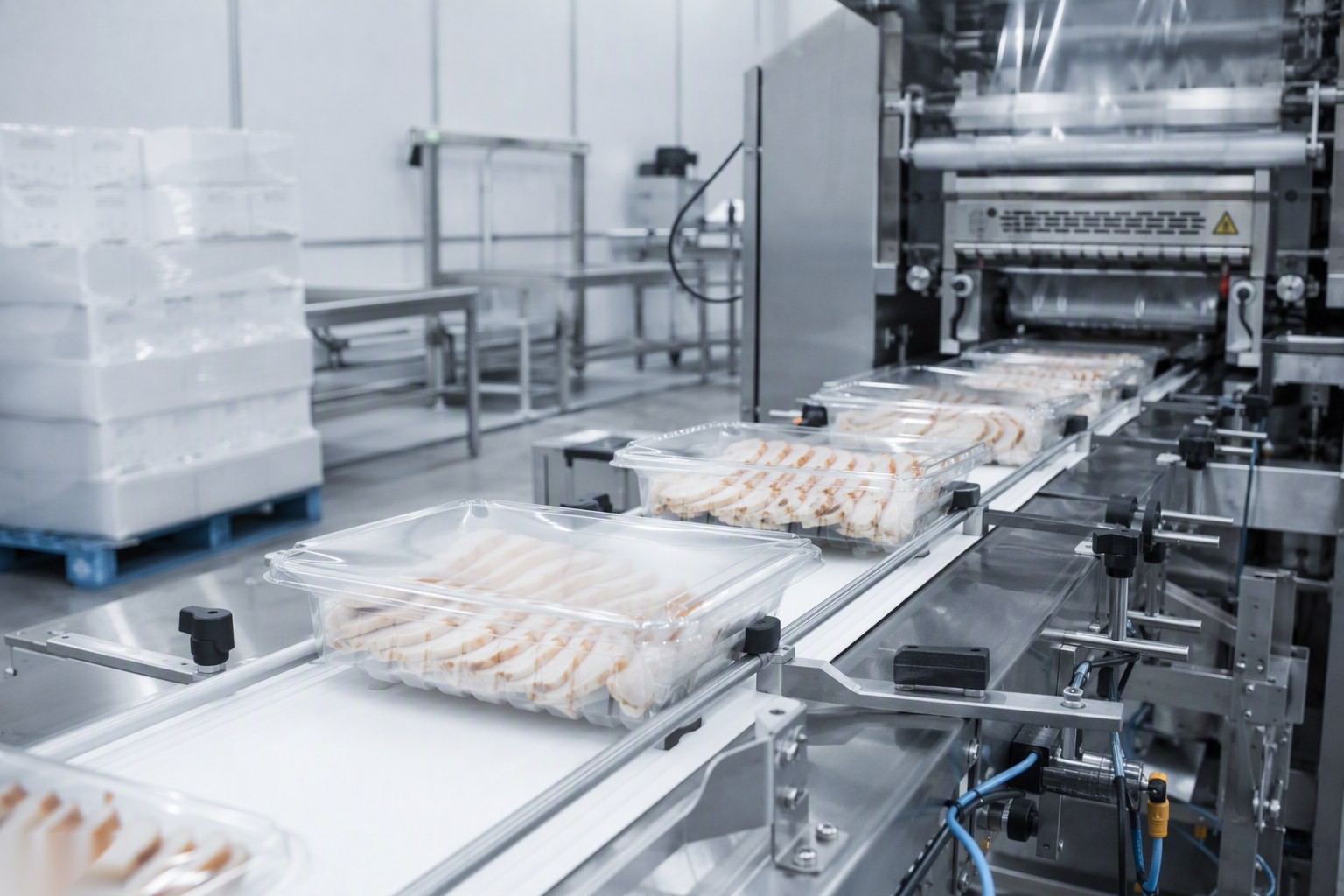
Marinated poultry is a classic trio application: fat-phase oxidation plus bacterial load, in a matrix where a background ginger note is welcome.
Chilled and ready-to-eat meats carry the classic double risk — bacterial spoilage plus lipid oxidation — and ginger's warm flavour profile is a natural fit for savoury matrices. Sauces, marinades, and dressings are water-in-oil battlegrounds where all three trio members have a role. Bakery and fatty snacks lean on the antioxidant half of ginger oil's résumé. Fresh-cut produce benefits from ginger-oil edible coatings and active films.
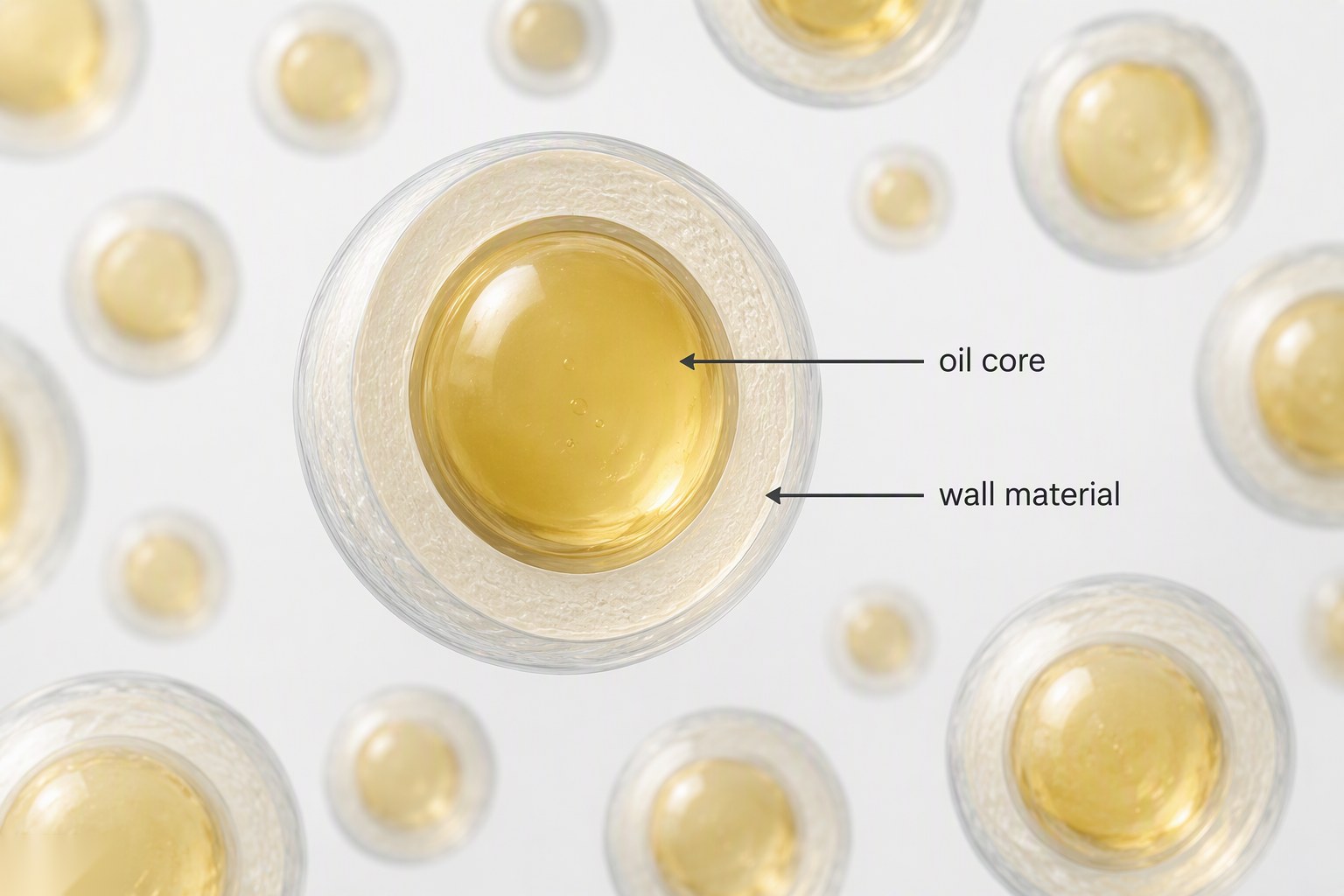
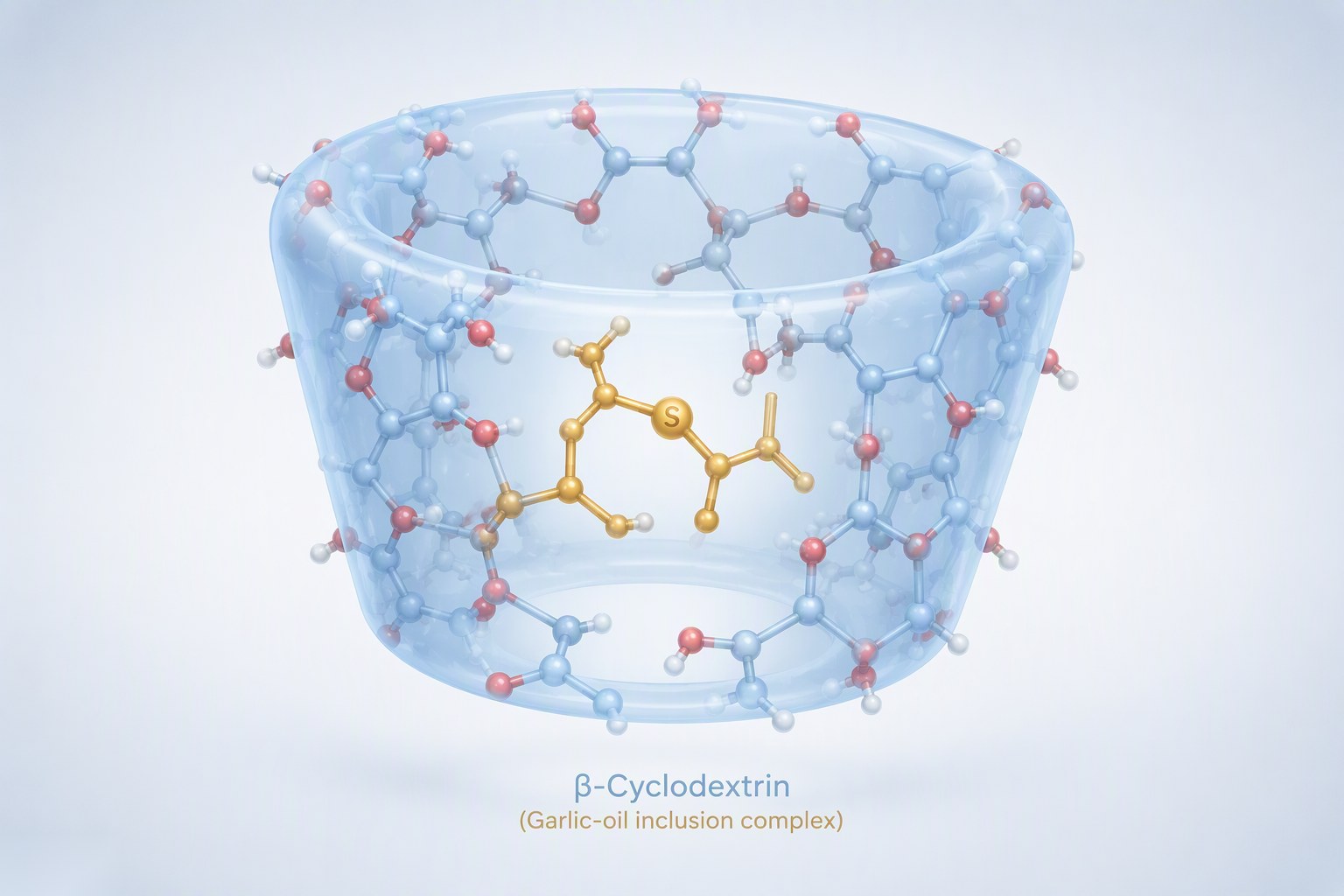
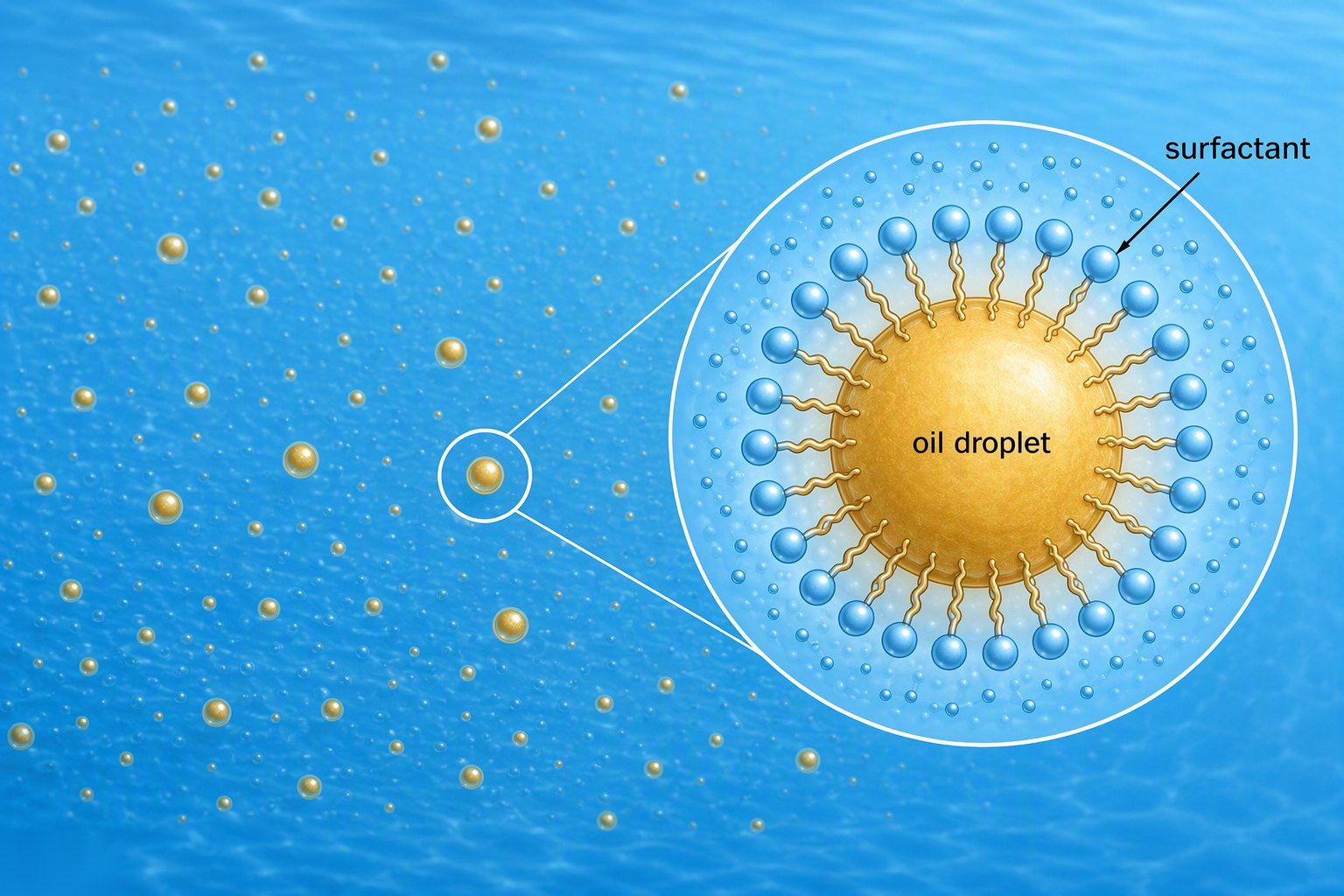
One engineering caveat: ginger oil is, after all, an oil. In water-based systems it separates without help. The solution is dosage form, not chemistry — ginger-oil nanoemulsions (droplets under 200 nm, stable in marinades and brines) and hydrogel or film coatings for surface protection. We covered both forms, plus a real scale-up case, in our article on ginger oil nanoemulsions and hydrogels; the spray-dried and cyclodextrin microcapsule platforms described in our garlic oil microencapsulation piece transfer directly to ginger.
One Honest Note on Regulation and Claims
Because this is where projects die if it is handled sloppily: in the EU and US you may not declare or market ginger oil as a preservative. What you can do — and what major brands already do with botanicals — is declare it as the flavouring it legally is, and let its documented activity support a reduced-load preservative system, validated by a challenge test on the finished product. EU label wording falls under Regulation 1334/2008 ("natural flavouring"); the US follows GRAS and FEMA practice. Final wording belongs with your regulatory consultant for each destination market, and a third-party challenge study is the belt-and-braces proof for your technical file. This is the same discipline we recommend for any natural preservation claim.
Buying Checklist
Hold ginger oil to the standard its price implies:
1. Zingiberene 20–40% with a batch-specific GC-MS chromatogram — the fingerprint that also exposes terpene-stretched dilutions (the adulteration pattern C14 cannot see). 2. Physicochemicals: specific gravity, refractive index, optical rotation within spec. 3. Safety panel: heavy metals, arsenic, microbiological limits. 4. Dosage form: for aqueous systems, specify nanoemulsion or microencapsulated formats; they also dampen sensory impact. 5. Sensory pilot at target dose — at 12–47 ppm the ginger note is a background warmth in most savoury matrices, but verify against your own product.
Our guide to reading an essential oil COA walks through each line item with a quality manager's eye.
The Bottom Line
Ginger oil does not replace vitamin C or potassium sorbate — it completes them. Vitamin C guards the water phase but cannot reach the fat; sorbate suppresses moulds and yeasts but leaves the bacterial front thin; ginger oil works the lipid phase and the bacterial spectrum, at ppm-level cost, under a label identity ("natural flavouring") that European and American food plants can adopt tomorrow. That is a rare combination in the clean-label toolbox: real activity, real literature, and no regulatory novelty.
The natural preservation story is not one hero ingredient. It is a trio — and ginger oil is the member most formulators have not met yet.
Frequently Asked Questions
Can ginger oil replace potassium sorbate?
Treat it as an auxiliary, not a replacement. Matching a chemical preservative's shelf life usually requires pairing ginger oil with packaging technology (modified atmosphere, vacuum) or other botanicals, then proving the result with a challenge test. The winning pitch is a reduced-sorbate system, not a sorbate-free one.
Will my product taste of ginger?
At typical food doses of 12–47 ppm, the ginger note reads as background warmth in most savoury applications — and ginger is already a welcome flavour in meat, sauce, and bakery matrices. Run a sensory pilot at your target dose; if your matrix is delicate, microencapsulated or nanoemulsion formats blunt the top notes further.
Is ginger oil an approved preservative?
No — and neither is any other essential oil in the EU or US. It is a natural flavouring (EU Regulation 1334/2008; US GRAS under 21 CFR 182.20) whose documented activity supports preservation. Declare the flavouring, validate the system, and let your regulatory consultant own the final wording.
Why add ginger oil if I already use vitamin C?
Because they guard different phases. Vitamin C is water-soluble and cannot stop oxidation in the fat fraction; ginger oil's terpenes concentrate exactly there. In any food containing meaningful fat — emulsions, meats, baked goods — the two are complements, not competitors.
How do I verify my ginger oil is genuinely natural?
The adulteration that matters for ginger oil is dilution with cheap natural terpenes — which carbon-14 testing cannot see, because the diluent is modern plant carbon. Demand a batch-specific GC-MS fingerprint with a zingiberene assay; for origin claims, pair it with C14. We compared both tests oil-by-oil in our article on why garlic oil needs C14 and ginger oil doesn't.
What does it cost per tonne of finished food?
At 12–47 ppm, a kilogram of ginger oil seasons roughly 20–80 tonnes of product — typically a few cents per kilogram at current bulk prices, before the microencapsulation premium where applicable. Against the cost of a failed retail audit or a shortened shelf life, the arithmetic is not close.
Wans Chemicals supplies food-grade ginger oil — distilled, GC-MS documented, with nanoemulsion and microencapsulated formats available — alongside garlic oil and a full range of spice essential oils for food and beverage applications. Request a sample, COA, or technical consultation.